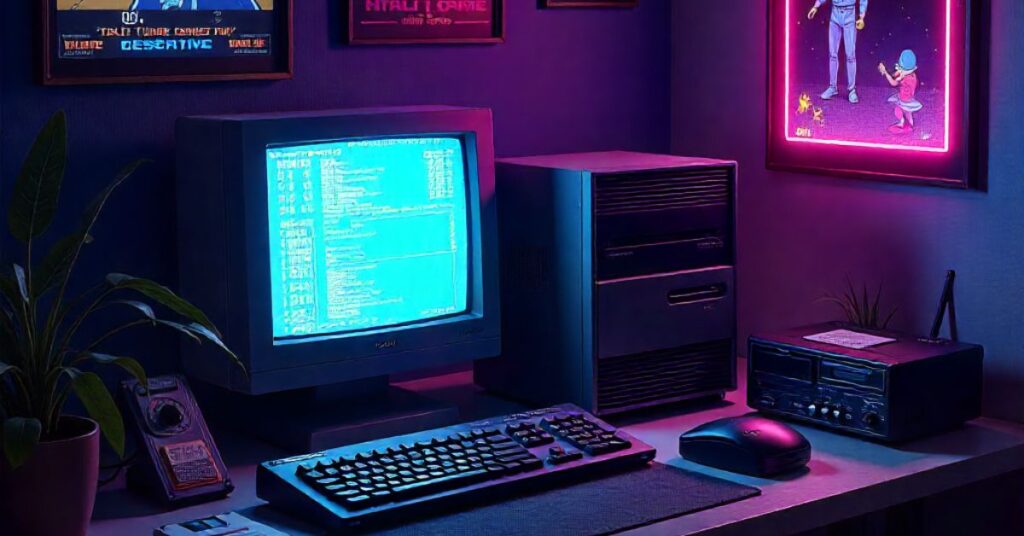
Introduction
The 1980s was not just a decade of big hair and blockbuster movies—it was a transformative period that laid the groundwork for much of the modern digital world. From the rise of personal computing to the early days of the internet, 1980s technology helped shape the way we communicate, work, and live today.
Many of the tech tools we now take for granted—smartphones, laptops, streaming services—have direct roots tracing back to this pivotal decade. For anyone fascinated by innovation or eager to understand the evolution of modern tech, the ’80s offer a rich and insightful starting point.
In this article, we’ll explore ten key areas where 1980s innovations made an indelible impact. Whether you’re a tech enthusiast, student, or digital professional, you’ll find valuable insights into how yesterday’s technology continues to define our digital lives today.
The Rise of Personal Computers
In the 1980s technology, personal computers transitioned from niche tools into mainstream household items. Brands like Apple, IBM, and Commodore turned PCs from business machines into must-have home devices.
The Apple II, released in the late 1970s, gained widespread use into the 1980s. But the real game-changer was IBM’s Model 5150, commonly referred to as the IBM PC, launched in 1981. Unlike closed systems, the IBM PC was open architecture, paving the way for countless clones and sparking the PC revolution.
Key Features:
- MS-DOS operating system became standard.
- PCs were used in schools, spawning early digital education.
- Software like Lotus 1-2-3 revolutionized business productivity.
| Popular PC Models | Release Year | Operating System |
|---|---|---|
| IBM 5150 | 1981 | MS-DOS |
| Apple Macintosh | 1984 | Mac OS |
| Commodore 64 | 1982 | Commodore BASIC |
Impact Today: The modern laptop, customizable desktops, and open-source ecosystems owe much to the PC wave of the 1980s.
Video Game Consoles Go Mainstream
While video games existed in the ’70s, it was the 1980s that saw gaming explode into a cultural phenomenon. The Nintendo Entertainment System (NES), launched in 1983 (Japan) and 1985 (U.S.), became a household name and set standards in home gaming.
Other notable consoles included:
- Atari 2600 (continued strong in early ’80s)
- Sega Master System
- Commodore Amiga (hybrid computer/gaming platform)
This was also when gaming mascots like Mario, Mega Man, and Link became industry icons.
Noteworthy Trends:
- Shift from arcade to home consoles.
- Emphasis on storytelling in games.
- Creation of major software franchises.
Visual Comparison: NES vs Sega Master System
| Feature | NES | Sega Master System |
|---|---|---|
| Release (US) | 1985 | 1986 |
| CPU | 8-bit Ricoh | 8-bit Zilog Z80 |
| Popular Games | Super Mario Bros. | Sonic the Hedgehog |
| Controller Ports | 2 | 2 |
Legacy Today: The $180B gaming industry still reflects foundational ideas from the 1980s era of home gaming.
The Beginning of Mobile Phones
When we think of mobile phones today, slim smartphones spring to mind. But the mobile journey began in the 1980s with massive, brick-sized devices like the Motorola DynaTAC 8000X, first commercially available in 1983.
Key Facts:
- Weighed nearly 2 pounds.
- Battery lasted ~30 minutes of talk time.
- Priced at around $4,000 (over $11,000 in today’s dollars).
Mobility was everything—even with limitations. These phones were used by business professionals who valued accessibility, often as a symbol of status.
Wider Impact:
- Laid the foundation for wireless networks.
- Drove development in lithium-ion battery technology.
- Set early UI precedents in T9 keypads and menu systems.
Modern Relevance: Every major advancement in smartphone tech today builds on these early mobile foundations from the ‘80s.
Music Goes Portable with the Walkman
Before iPods and Spotify, portable music meant clutching a Sony Walkman, the iconic cassette player that first launched globally in 1980 technology. It allowed people to carry their music anywhere—jogging, commuting, or walking to work.
Features That Made It Revolutionary:
- Two headphone jacks for sharing.
- Lightweight and battery-powered.
- Mono and stereo sound options.
The Walkman didn’t just change music consumption—it shifted tech culture toward personalized experiences.
Cultural Impact:
- Redefined music consumption behavior.
- Spurred popularity of mixtapes.
- Influenced headphone design and fashion.
Real-world example: The Walkman’s DNA still lives on in every Bluetooth earbud or playlist today. It made music mobile and deeply personal.
VCRs and the Video Revolution
If the TV ruled the 60s and 70s, the Video Cassette Recorder (VCR) reigned supreme in the ‘80s. It offered on-demand access to movies and TV shows—before streaming was even conceivable.
Key Innovations:
- Time-shifting TV content (record/RW capability).
- Home rental of movies became mainstream.
- Sparked the “format war” between VHS and Betamax.
| Feature | VHS | Betamax |
|---|---|---|
| Video Length | Up to 6 hours | Up to 2 hours |
| Market Adoption | ~90% by late ‘80s | <10% share |
| Major Supporters | JVC, Panasonic | Sony |
Legacy: The modern binge-watching trend owes much to VCRs, which introduced the idea of watching what you want, when you want.
The Early Internet and ARPANET
Despite only reaching the general public in later decades, the roots of the internet were firmly planted in the 1980s. The evolution of ARPANET, a government research initiative, began transitioning into what would become the modern internet.
Milestones:
- Introduction of TCP/IP protocol in 1983.
- Domain Name System (DNS) introduced in 1985.
- Email became a primary communication method in academia.
At this stage, access was limited to universities and government labs—but innovation never rests.
Why It Mattered:
- Built the structural layer of the internet.
- Triggered development of early networking protocols.
- Established norms for connected communication.
Today: Every URL, email, or Google search owes a debt to these early infrastructure steps of the 1980s.
Advances in Computer Graphics and Animation
While today’s graphics are photorealistic, this field got a major push in the 1980s. The film and gaming industries began using digital tools to replace traditional hand-drawn approaches.
Notable Technologies:
- Vector and raster graphics gained popularity.
- Companies like Pixar (then part of Lucasfilm) pioneered 3D animation.
- Games like Elite (1984) showcased wireframe 3D models.
Hollywood Breakthroughs:
- Tron (1982) combined live-action with computer animation.
- The Last Starfighter used CGI for space battle scenes.
Technical Terms That Emerged:
- Polygon rendering, pixel shading, frame buffering.
- Tools like Adobe and Silicon Graphics began development.
Impact: Laid the groundwork for today’s robust CGI and real-time rendering engines like Unreal and Unity.
The Launch of the CD and Optical Media
The compact disc (CD), a joint project between Sony and Philips, launched in 1982 and changed how we stored and consumed media.
Why It Mattered:
- Offered up to 700MB of storage.
- Improved audio fidelity over analog formats.
- Ushered in the digital storage era.
CD-ROMs also transformed software distribution, leading to the first multimedia PC revolution in homes and schools.
Then vs Now
| Format | Launched | Storage | Medium |
|---|---|---|---|
| Cassette Tape | 1963 | 60–90 minutes | Analog |
| CD | 1982 | 700 MB | Digital |
Today’s Equivalents: Blu-rays, SSDs, streaming services—all built on the convenience and efficiency pioneered by the CD format.
Robotics and Artificial Intelligence Beginnings
While today’s AI tools can mimic human writing and speech, the 1980s marked foundational developments in early AI and robotics.
Key Developments:
- Expert systems simulated decision-making, like XCON by DEC.
- Robots entered industrial use—especially in car manufacturing.
- Japan’s Fifth Generation Computer Project sought AI breakthroughs.
Although limited in capability, these early tools pushed machine learning, logic trees, and automation forward.
Influence Today:
- Laid pillars for today’s chatbots, recommendation engines.
- Inspired the AI boom of the 2020s.
Cultural Tie-in: Films like Short Circuit and The Terminator sparked public curiosity and ethical debates around AI.
Tech Culture and Consumer Adoption
Technology in the 1980s didn’t evolve in a vacuum. It was tightly joined with culture, branding, and consumer behavior.
Trends That Defined the Era:
- “Tech as status” — owning a PC or car phone meant success.
- Advertising turned geeks into heroes (see Apple’s 1984 ad).
- Rise of DIY computing and hacking subcultures.
Cultural Highlights:
- Popular magazines: BYTE, Compute!, Wired (early issues).
- Tech in film: WarGames, Back to the Future, Blade Runner.
This era turned technologists into celebrities and inspired a generation of engineers and coders still shaping the industry today.
FAQs
What was the most influential 1980s technology?
The personal computer, particularly the IBM PC, laid the foundation for all modern computing.
When did the first mobile phone come out?
The Motorola DynaTAC 8000X was commercially released in 1983.
Did the internet exist in the 1980s?
Yes. ARPANET evolved into the early internet during the decade, with key protocols launched in 1983–1985.
What was the role of Sony in 1980s tech?
Sony led in consumer electronics with the Walkman and co-developed the compact disc (CD).
Were video games popular in the 1980s?
Extremely—this was the decade when home gaming via NES and Sega went mainstream.
Conclusion
The 1980s were a launching pad for the digital age. While today’s tech seems lightyears ahead, it draws heavily from innovations developed during this vibrant decade. From PCs and video games to early AI and the beginnings of the internet, the influence of 1980s technology persists in every tap, click, and stream we engage in today.
Technology is a continually evolving story—but to understand where we’re headed, it’s crucial to know where we began. Bookmark this article for a nostalgic yet educational trip back in time.