Introduction
In 2025, innovation isn’t just a buzzword—it’s a necessity. From autonomous vehicles and gene editing to carbon-neutral materials and quantum networks, the technologies reshaping our world all share a common birthplace: specialized research and development hubs known as Advanced Technologies Laboratories.
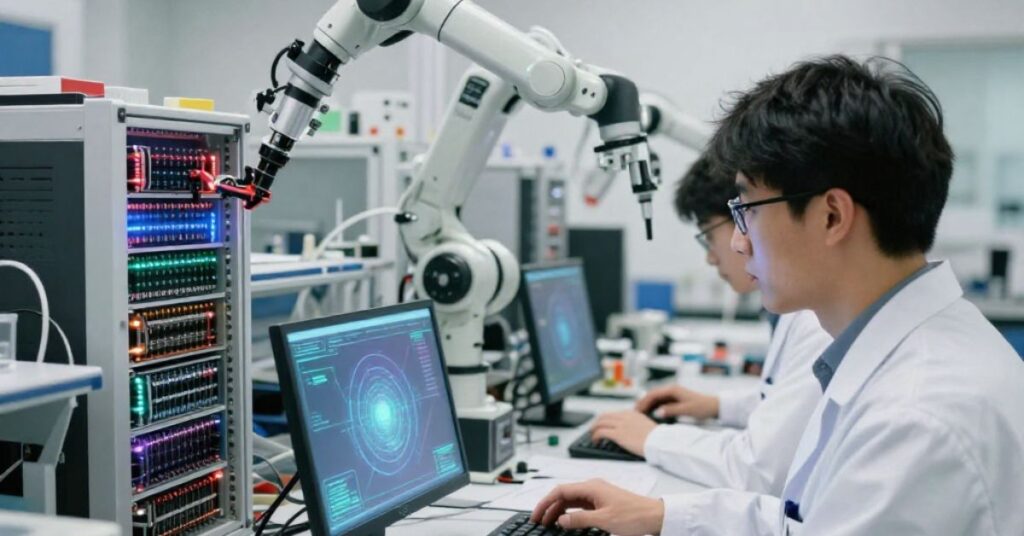
These labs are where theoretical science meets real-world application. Operating at the frontier of disciplines such as artificial intelligence, bioengineering, quantum computing, and nanotechnology, they are the incubators for the innovations that will define our future. Whether inside tech giants like Google or university research centers like MIT’s CSAIL, these environments blend expertise, cutting-edge equipment, and cross-disciplinary talent to transform ideas into disruptive breakthroughs.
In this deep-dive, we’ll explore how Advanced Technologies Laboratories operate, what they focus on, their role in tech trends of 2025, and how they’re shaping everything from medicine to climate technology.
What Are Advanced Technologies Laboratories?
Advanced Technologies Laboratories are specialized environments dedicated to researching, developing, and validating next-generation technologies. These labs can be standalone research centers, units within large corporations, or part of educational institutions.
They typically embody:
- Cross-disciplinary teams including physicists, computer scientists, biologists, and engineers.
- High-end infrastructure, such as cleanrooms, supercomputing clusters, and quantum testbeds.
- Long-term innovation goals beyond market constraints.
For example, Microsoft’s Quantum Lab and IBM Research push beyond product cycles to shape foundational tech layers that may underpin the next 50 years.
Key Areas of Research in 2025
In 2025, the scope of innovation within Advanced Technologies Labs spans multiple high-impact fields:
| Research Domain | Emerging Focus in 2025 |
|---|---|
| AI & Machine Learning | Trustworthy AI, edge AI, LLM optimization |
| Quantum Computing | Fault-tolerant qubits, quantum networking |
| Biotechnology | CRISPR 3.0, personalized medicine |
| Robotics | Humanoid robotics, autonomous drones |
| Energy & Materials | Fusion energy prototypes, graphene-based materials |
| Climate Tech | Carbon capture nanomaterials, seawater desalination systems |
These developments don’t just power the future—they redefine societal norms and industries. Labs such as MIT’s Media Lab and DeepMind’s research facility represent leadership in multidisciplinary innovation.
AI Innovation: The Role of Labs in the Age of Intelligence
In 2025, artificial intelligence is tightly integrated into everything—from finance and agriculture to healthcare and logistics. But the most transformative innovations trace back to the labs.
Key Innovations from Labs:
- Explainable AI (XAI): Making AI decision-making human-comprehensible.
- AI Agents: Self-learning systems capable of autonomous decision-making across contexts.
- Neuromorphic Chips: Hardware mimicking human brain function, vastly reducing energy use.
Google DeepMind and Stanford AI Lab remain leaders in foundational AI model research. In 2025, these labs helped push the adoption of multi-modal AI, which combines language, vision, and sensory data to interpret complex environments similar to humans.
How Labs Drive Quantum Computing Breakthroughs
Quantum computing promises to revolutionize industries through calculations billions of times faster than classical computers. But we’re still in the “noisy intermediate-scale quantum” (NISQ) era—where labs are essential.
How Labs Propel Quantum Innovation:
- Error Correction Research: Labs such as MIT Lincoln Laboratory are refining quantum error-correction mechanisms.
- Cryogenic Engineering: Maintaining qubits at near-absolute-zero temperatures.
- New Qubit Materials: Using diamond nitrogen-vacancy centers or twisted bilayer graphene.
In 2025, IBM’s Quantum Development Lab achieved a 1000-qubit demonstration with significant coherence improvements, thanks to its modular lab infrastructure.
Biotech Revolution: Gene Editing and Synthetic Life
Gene editing is no longer science fiction. Advanced Technologies Laboratories are pioneering biotech at a molecular level—editing DNA, designing synthetic organisms, and enabling custom medical therapies.
Key biotech focus areas in 2025:
- CRISPR Advancements: CRISPR-Cas systems now offer tissue-targeted editing with far better precision.
- Synthetic Biology: Labs like SynBioBeta are programming cells to perform tasks like detecting cancer or producing biofuels.
- Personalized Genomics: Genomic labs assist in crafting individualized treatments based on a person’s unique genetic data.
These advancements are increasingly supported by AI, automating tasks like protein folding prediction—a solution made commercially viable by innovations emerging from lab-scale testing.
Industry Applications: From Space to Healthcare
R&D labs are often the origin point for technologies that disrupt entire industries. By 2025, industries most impacted by lab-driven tech include:
| Industry | Innovative Lab-Based Solutions |
|---|---|
| Healthcare | AI-driven diagnostics, CRISPR therapies, lab-grown organ tissues |
| Space Tech | Reusable spacecraft materials, autonomous rovers |
| Agritech | Micro-drone pollinators, climate-resilient crops |
| Defense | Quantum-secure communications, AI threat modeling |
| Energy | Lab-developed fusion energy prototypes (e.g., Tokamak advancements) |
This reflects the expanding role of labs not just in R&D but also in shaping policy, regulation, and stakeholder adaptation.
Talent, Tools, and Culture Inside High-Impact Labs
What differentiates labs like OpenAI’s Research Division or the Max Planck Institute? The blend of exceptional talent, collaborative culture, and cutting-edge tools.
Inside the Lab:
- Toolkits: Cleanrooms, 3D bioprinters, electron microscopes, photonics labs.
- Cultures: Focused on calculated risk, open innovation, and cross-functional collaboration.
- Talent Dynamics: AI researchers working with neuroscientists; biologists co-developing with systems engineers.
Recruitment in 2025 leans heavily toward multi-disciplinary expertise, making knowledge synthesis a core lab culture.
Public vs. Private Research Labs: What’s the Difference?
The innovation ecosystem is split across public-funded and private labs. Both are vital but operate differently.
| Factor | Public Labs | Private Labs |
|---|---|---|
| Funding Model | Government grants, university budgets | Corporate ROI-driven investments |
| Example | NASA Jet Propulsion Lab, CERN | Apple R&D Centers, Amazon’s Lab126 |
| Focus | Fundamental science, long-term knowledge | Applied science, product innovation |
| IP Ownership | Often public or shared | Proprietary |
The synergy between the two—ease of publication in public labs and go-to-market focus in private labs—drives overall tech acceleration.
Real-World Success Stories Emerging from Labs
Many of today’s tech giants owe their biggest leaps to a lab breakthrough.
Notable Innovations from Advanced Labs:
- GPT AI Models: Born in research environments like OpenAI’s language lab.
- COVID-19 mRNA Vaccines: Accelerated by biotech labs using RNA-modification platforms.
- ATRAS Robotics: Boston Dynamics’ robots designed in DARPA-funded labs.
In 2025, NVIDIA’s new architecture for AI acceleration chips was developed entirely in-house at its Advanced Research Lab before its landmark CES reveal.
Challenges and the Future Outlook of R&D Laboratories
Despite their success, Advanced Technologies Laboratories face several challenges in 2025:
- Ethical Oversight: Balancing pioneering work with social responsibility (e.g., gene drives).
- Talent Gaps: Shortage of cross-disciplinary experts.
- Funding Volatility: Especially in economic downturns or policy shifts.
Future Outlook:
Looking ahead, labs are moving toward distributed research ecosystems—where physical labs collaborate virtually across continents. We also expect growing integration of generative AI and robotics in the R&D workflow, minimizing repetitive lab tasks and accelerating time to discovery.
FAQs
What are Advanced Technologies Laboratories?
They’re research centers that develop next-generation science and technology solutions in fields like AI, biotech, and materials science.
Are they only part of universities?
No, they exist within corporations (e.g., Google X), government bodies (e.g., NASA), and startups.
Why are they important?
They bridge foundational science with practical applications, driving societal and industrial transformation.
What careers are available in these labs?
Roles include AI researchers, robotics engineers, biotechnologists, quantum physicists, data scientists, and more.
How do they stay ahead?
By combining cutting-edge tools, interdisciplinary collaboration, and a long-term view of technological potential.
Conclusion
Advanced Technologies Laboratories are not just labs—they’re launchpads. Their work today defines the products, solutions, and systems of tomorrow. In 2025, they stand as crucial entities for national competitiveness, technological sovereignty, and human advancement.
With industries leaning on lab-born innovation more than ever, there’s never been a more exciting time to watch—or work in—these specialized enclaves of technological acceleration.
Curious about how to collaborate or enter this field?
Explore partnership opportunities with R&D platforms, subscribe to futurist newsletters, or consider upskilling in key tech domains starting today.