Introduction
In today’s hyper-connected digital age, leveraging the “connections” between data points leads to discovering deeper “clues” that drive informed business decision-making. Publications like Forbes frequently explore how cutting-edge technology is carving new paths for innovation, strategy, and predictive insights. In 2025, understanding these connections and using them as clues is more important than ever for businesses striving to stay competitive.
The buzz around “Connections Clues Forbes” reflects a broader trend where data connectivity, artificial intelligence (AI), and real-time analytics converge to give enterprises a real edge. This article explores how modern technology is translating business data into actionable intelligence, with fresh perspectives, comparisons, and analysis based on current trends and expert viewpoints.
The Evolving Role of Technology in Business Intelligence
Business Intelligence (BI) in 2025 is no longer just about dashboards and static reports. It’s a dynamic, real-time engine powered by AI, cloud computing, and IoT.
What’s Changing:
- Real-Time Integration: Data is now gathered across distributed systems in milliseconds.
- Contextual Insight: Understanding the “why” behind numbers is as critical as the numbers themselves.
- Always-On Analysis: With cloud and AI analysis, BI systems now continuously analyze for hidden opportunities.
A primary differentiator of modern BI is the interconnectivity of systems—CRM, ERP, marketing platforms, and e-commerce data now speak together with AI acting as an interpreter.
Understanding Data Connections in the Digital Ecosystem
In technology-driven ecosystems, “connections” refer to how different sources of data relate to one another. These interlinkages help businesses recognize trends earlier and act faster.
Key Connection Types:
- APIs: Allow seamless data transfer between platforms.
- Data Lakes: Unified pools of structured/unstructured data.
- Customer Journeys: Connect user interactions across devices/channels.
Example: A retail brand can correlate Instagram click-thru data with POS purchases to optimize real-time promotions.
| Type of Data Connection | Use Case | Tools Used |
|---|---|---|
| API Integration | Unified customer view | Zapier, MuleSoft |
| CRM–ERP Link | Sales and inventory optimization | Salesforce, SAP |
| IoT–Analytics | Predictive maintenance | Azure IoT Hub, AWS Lambda |
Clues from Behavioral Analytics: A Deep Dive
Behavioral analytics gives organizations subtle “clues” about how users engage with products, websites, and systems. These clues, when connected, produce a holistic picture of user intent.
Key Behavioral Signals:
- Click-paths
- Session durations
- Feature usage frequency
- Drop-off points in a journey
2025 tools like Mixpanel, Heap, and Amplitude use machine learning models to discover anomalies or golden paths, helping product teams optimize interfaces or pricing in real time.
Pro Insight: The clues from behavioral data don’t just optimize UX—they also predict churn, recommend campaigns, and even detect fraud patterns.
How Forbes-Recognized Businesses Use Data Differently
Forbes profiles often highlight companies excelling due to intelligent tech adoption. These businesses integrate AI-driven connections and data clues across all operations.
Common Traits Among Forbes 100 Leaders:
- Data as Core Strategy: Data is not an IT asset—it’s a business growth engine.
- Cross-Functional BI Teams: Data scientists collaborate with marketing, product, and operations.
- Feedback Loops: Every user action feeds into iterative improvement algorithms.
A 2025 Forbes case study of fintech leader HyperBank showed how combining location data with transaction history allowed it to reduce fraud by 68% in one quarter.
The AI Layer: Automating Insight Discovery
AI is no longer a “nice-to-have.” In 2025, it’s the layer where connections become insight and data becomes action.
AI-Powered BI now includes:
- Natural Language Query: Ask questions like “Which campaign had highest ROI?” in plain English.
- Anomaly Detection: Identify outliers before they escalate into problems.
- Auto-Generated Reports: Tools like Tableau Pulse or Microsoft Fabric Copilot craft customized dashboards on the fly.
| AI Feature | Tool Example | Business Impact |
|---|---|---|
| Auto-insights | Power BI + Copilot | Speeds up decision-making |
| NLP Queries | ThoughtSpot | Makes data accessible to non-analysts |
| Predictive Forecasting | Salesforce Einstein | Optimizes sales & inventory |
Predictive Intelligence: From Past Patterns to Future Moves
Predictive analytics uses historical data to “suggest” future outcomes. Combined with AI, it uncovers the probabilistic path ahead—insightful for enterprises aiming to stay steps ahead.
Real-world uses:
- Retail: Predicts demand surges based on events, weather, social sentiment.
- Healthcare: Forecasts patient needs or potential readmissions using wearable data.
- Finance: Uses algorithmic patterns for credit risk detection or stock forecasting.
In 2025, platforms like SAS Viya, DataRobot, and Google Vertex AI are leading predictive modeling with advanced neural forecasting.
The Rise of Edge and Real-Time Analytics
With IoT and edge computing, a new frontier in real-time data processing is rising.
At the edge (near the device), data is processed faster and more securely, preventing latency issues.
- Real-time fraud detection in payment processing
- Smart factories monitoring machine health instantly
- Transportation systems dynamically managing traffic
Expert View: Edge analytics reduces decision latency, lowers cloud costs, and ensures compliance (especially useful with new data sovereignty laws in 2025).
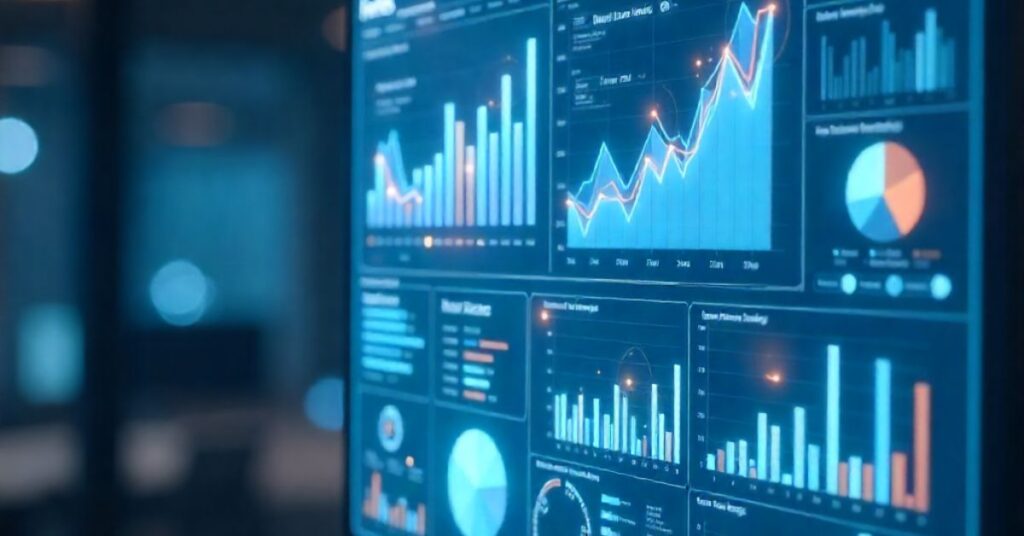
Visualization Tools That Uncover Hidden Clues
The human mind processes visuals 60,000x faster than text. That’s why modern BI relies heavily on advanced data storytelling and intelligent visuals.
Popular Tools in 2025:
- Power BI: Real-time dashboards with Copilot integration
- Looker Studio: Custom data app creation
- Tableau GPT: AI-assisted visualizations with narrative context
| Tool | Best Use Case | Unique Feature |
|---|---|---|
| Tableau | Complex enterprise dashboards | VizQL + generative AI |
| Power BI | Real-time decision support | Embedded FreshBooks & Dynamics |
| Looker | Multi-source web-based apps | BigQuery native integration |
Visuals aid not just in understanding data, but also in convincing stakeholders, making it a strategic advantage.
Data Governance & Trust in 2025
Amid growing tech sophistication, data trust has taken center stage. In 2025, businesses must guard against not just breaches but bias, misuse, and inaccuracy.
Key Governance Pillars:
- Transparency: Earning trust through explainable AI
- Compliance: Staying ahead of GDPR 2.0, CCPA+, and local regulations
- Auditability: Keeping data logs tamper-proof
Notable Trend: Forbes-referenced companies now appoint a Chief Data Ethics Officer (CDEO) to maintain data integrity, especially in AI-driven decisions.
Actionable Steps for Businesses to Leverage Connections and Clues
Ready to apply the power of connections and clues to your company’s advantage?
- Map Your Data Sources: Know what you’re collecting and from where.
- Break Down Silos: Integrate your tech stack for end-to-end insights.
- Invest in AI-Augmented BI Tools: Don’t delay automation any longer.
- Focus on Explainable Models: Trust builds adoption.
- Train Teams Continuously: Tech is only as good as its users.
Pro Tip: Start small. Run one AI-powered BI pilot inside a business unit and scale from there using templates and case studies.
FAQs About Connections Clues Forbes in Technology
What does “Connections Clues Forbes” refer to in technology?
It refers to analyzing connections in tech systems to gather business “clues,” often explored in Forbes articles on innovation and intelligence.
How are companies in 2025 using connections and clues?
They use connected data ecosystems and AI to generate actionable insights from behavioral clues and real-time systems.
What tools are best for extracting business insights from data?
Tools like Power BI, Tableau, and Google Looker with AI capabilities are leading in 2025.
What’s new in data governance this year?
Compliance, transparency, and explainability are now business-critical due to evolving regulations and increased AI accountability.
How can SMBs use connections and clues like big enterprises?
Start with low-code tools, focus on one integrated platform, and adapt AI features incrementally.
Conclusion
In 2025, the true power of technology doesn’t just lie in capturing data—but in connecting the dots and extracting the right clues to act upon. As Forbes and other thought leaders recognize, the businesses thriving today are those that treat data not as a byproduct—but as the primary clue to future opportunities.
By leveraging smarter integrations, AI-driven insights, and ethical data governance, businesses can turn everyday data into a competitive superpower.